

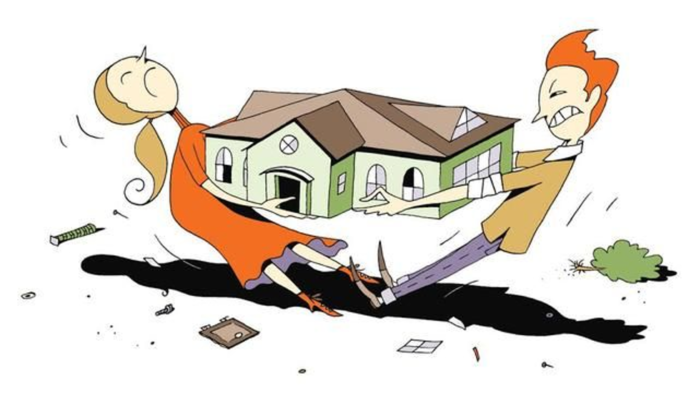
We recently had a client die, where his estate plan enabled all four children to share a house and ensured they had the money to maintain it. The investment properties of the client were sold, with the proceeds going into the trust. Rental income helps cover some of the expenses, and each child pays a nominal fee when staying at the vacation house. So far, the plan has worked: All four siblings are still on speaking terms.
As sole trustee, one of the children of our client decided from the get-go that he wouldn’t do this by himself and that everyone was in on the decisions. Creating a comprehensive estate plan is about having conversations before parents become ill or die. People are so private about their money, but families need to be better about having tough conversations.
Family conversations are so important to the process of creating an estate plan, we often host family meetings for our clients and their children when drafting and estate plan. The primary objective is family harmony—it’s not always taxes. It’s not always easy to attain and maintain. There are typically very strong emotional attachment to homes, but problems arise when some siblings have moved far from home or when one sibling lacks the financial means to maintain his share of the property.
We worked with another family in which three siblings were beneficiaries of a trust that held a family vacation home. Before the parents died, we moderated a family meeting that detailed the parents’ finances and let the siblings express their opinions about the property. After the parents died, one sibling bought out the other two—they didn’t live nearby and were in different economic circumstances.
In a separate case, however, there was friction among three siblings over a perceived inequality in the division of assets. In this instance, the client’s daughter, along with her husband and son, had invested a lot of “sweat equity” to maintain a home. The father believes his daughter and her husband earned the right to be the next owners. Making her the sole beneficiary of the trust that owned the house resulted in animosity with the other children that lasted years.
Animosity also can arise when a parent has a poorly structured estate plan. If a home and other real property, like land, aren’t transferred to a trust before the death of a final parent, it likely will end up in the probate court system. The estate’s executor or administrator must maintain the property and pay its expenses until the property is either sold or distributed to beneficiaries. When there is conflict among siblings, probate procedures can be lengthy and expensive.
We often step in as a mediator and help siblings resolve their disputes. We have seen many siblings contest an estate plan by arguing that when their parents signed the will or trust, they lacked mental capacity or were under undue influence from another person. Almost all parents add an in terrorem clause to a will or trust which says that any beneficiary who contests it forfeits their share.
When a disputed estate plan goes into mediation, we often try to meet with the siblings and their lawyers as a group. Then each sibling and his or her lawyer is placed in a separate room, and we shuttle proposals back and forth between them. Usually they can tackle the issues in a day. But if there is an impasse, the case could go to court. Legal costs in a dispute with multiple appeals can run upward of $100,000. The more money involved, the greater ability to sustain the fight.
There’s also a risk that a court will order a “partition by sale” of the property, resulting in it being sold and the proceeds distributed among the siblings. To help avoid such a result, many states have enacted the Uniform Partition of Heirs Property Act. When applicable, the court gets an appraisal of the home. Then the co-owner(s) who didn’t file the partition petition have the right to buy out the co-owner who did file it. If that doesn’t occur, the court appoints a real-estate agent to list the property, which can result in a sale price that is closer to fair market value.
Regardless of how a home is passed on, the process can take a toll on the whole family. It’s sad because it could lead to the destruction of relationships that otherwise would have continued.
- A well-structured estate plan includes a will, a trust detailing the handling of parents’ holdings both while living and after death, and naming of trustee(s) and estate executor(s). It should include instructions for what happens when a parent becomes incapacitated. The plan also accounts for assets that automatically transfer to heirs who are named beneficiaries, such as life insurance. A durable power of attorney, healthcare power of attorney with medical directives are also commonly part of an estate plan.
- We conduct family meetings in which parents and siblings are upfront about their wishes. We also recommend for all to hold periodic meetings as circumstances change. We might have put this plan in place 20 years ago, and a lot can change in that time.
- If a sibling is getting a greater share of a family home, parents can bequeath assets to the other heirs to balance the inheritance. That can be done with a life insurance policy, while still living, can also make tax-free annual gifts to disperse assets.
- For siblings who have inherited a home that sits on a large amount of land, donating some of the acreage to a conservation easement could yield tax advantages that would help keep the home in the family.
- Often, a sibling who lives close to the family home will buy out the portion held by siblings who live farther away. Siblings could also agree to jointly own a house, and rent it out, either to one of the siblings, or to a third party.
- To cover the costs of property maintenance, one sibling can pay the expenses and accept a promissory note from the others that promises to pay a specified amount over time, Mr. Stoddard adds.